Supporting Long-Term Oral Health and Confidence
Comprehensive Dental Check-ups at Danforth Dental Care


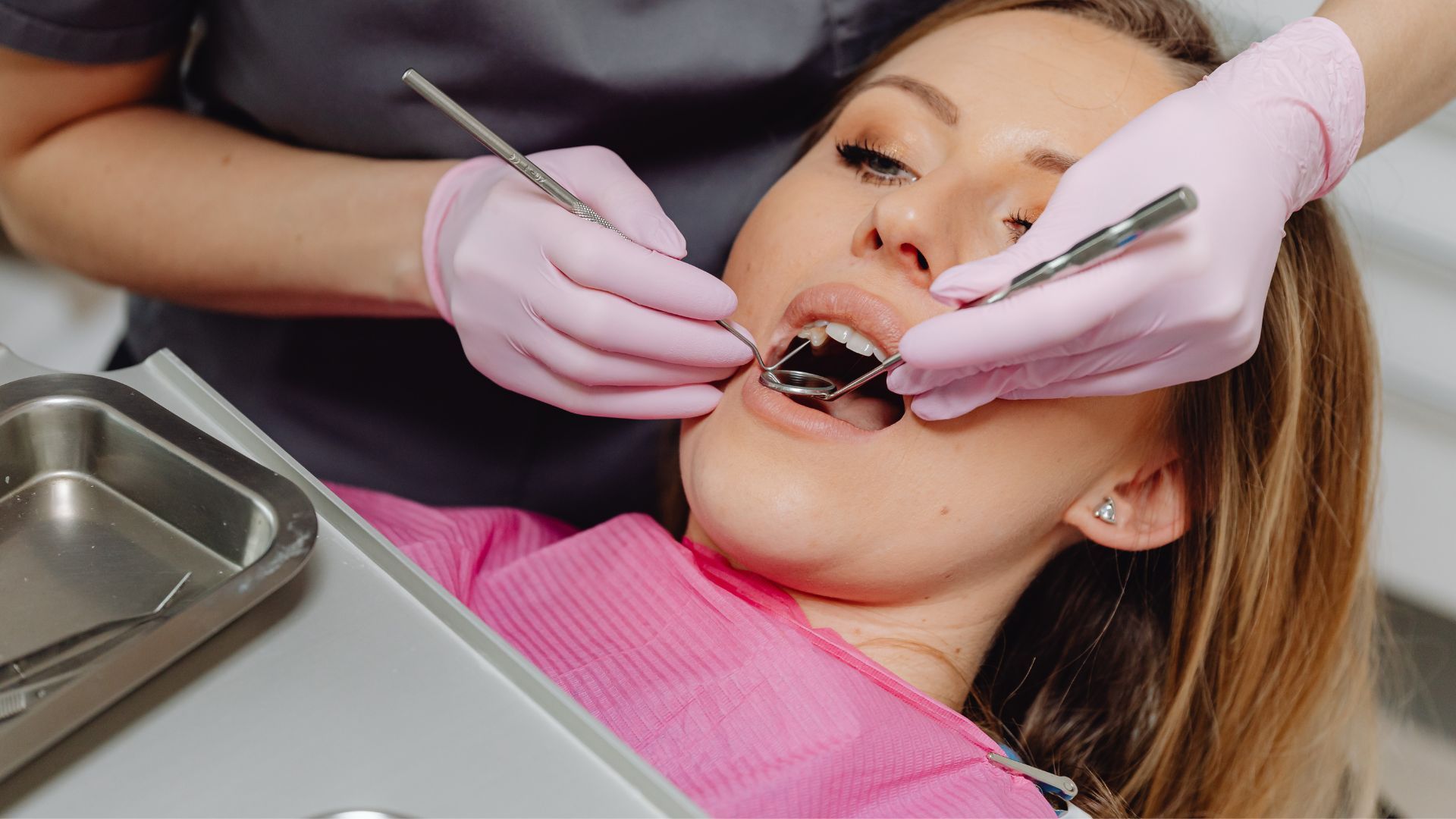
Regular dental check-ups are the bedrock of good oral health. At Danforth Neighbourhood Dental Centre, we ensure your visits are thorough, informative, and proactive. Think of these visits as more than just cleanings; they are essential steps to ensure your smile remains strong for a lifetime.


Thorough Examinations for Early Detection


During your check-up, our dentists perform a detailed examination of your entire mouth, focusing on:


  • Structural Integrity: Checking teeth for decay, wear, or hidden cracks.
  • Periodontal Health: Assessing gums for inflammation or early indicators of gum disease.
  • Oral Cancer Screening: Examining the tongue, cheeks, and throat for unusual changes.


Catching problems early is the key to simpler, less invasive treatments. By identifying issues like small cavities before they progress, we save you from future discomfort and higher costs. This attentive approach is a hallmark of Danforth dental care.


Restorative Treatments for Lasting Smiles


Sometimes, despite your best efforts, your teeth can sustain damage or decay. Our restorative dentistry services are designed to bring back your function and comfort.


  • Addressing Cavities: We use modern white fillings that blend seamlessly with your natural teeth to stop decay in its tracks.
  • Repairing Damage: Whether it’s a small chip or a significant break, we offer bonding and custom crowns to restore strength and aesthetics.
  • Replacing Missing Teeth: For a permanent solution to tooth loss, dental implants provide a stable, natural-looking base that prevents other teeth from shifting.


Preventative Strategies for Lifelong Wellness


We focus on helping you stay ahead of issues. Simple treatments like fluoride varnishes and dental sealants act as shields, protecting deep grooves in your teeth from bacteria and acid. Additionally, our team provides personalized periodontal care to manage gum disease and prevent tooth loss.


Cosmetic Enhancements for Renewed Confidence


A bright, healthy smile can significantly impact your self-esteem. We offer several ways to achieve your aesthetic goals:


  • Teeth Whitening: Lift stains from coffee or tea with professional whitening solutions.
  • Veneers: Custom shells that fix discolouration, chips, or minor misalignments for a uniform look.
  • Smile Makeovers: A personalized combination of treatments to refresh your entire appearance.


Specialized Care for All Ages


Dental needs evolve as we age, and our practice is equipped to handle every stage:


  • Pediatric Dentistry: We make first visits fun and stress-free for kids, focusing on children’s dentistry and early habit-building.
  • Orthodontic Consultations: We provide guidance on clear aligner treatments (ClearCorrect) to improve alignment and hygiene.
  • Geriatric Needs: From managing dry mouth to fitting comfortable dentures, we ensure our senior patients maintain their quality of life.


Patient-Centred Approach


At Danforth Neighbourhood Dental Centre, we view dental care as a partnership. We prioritize:


  1. Clear Communication: Explaining every option so there are no surprises.
  2. Comfort: A relaxing environment, supplemented by sedation dentistry for those with dental anxiety.
  3. Financial Accessibility: We accept the Canadian Dental Care Plan and offer flexible payment options.


Frequently Asked Questions

  • Q:How does Danforth Dental Care help patients with dental anxiety?

    We offer several sedation options, including nitrous oxide and IV sedation, administered by our on-staff expert in Dentistry & Anaesthesia, Dr. Robert P.M. Matsui.


  • Q: Can I get a same-day appointment for a dental emergency?

    Yes. We offer extended hours and emergency dental services to address urgent issues like toothaches or broken teeth as quickly as possible.


  • Q: Are your cosmetic treatments personalized?

    Absolutely. Whether you are interested in veneers or a full smile makeover, we provide a thorough consultation to match treatments to your specific facial structure and goals.

  • Q: Does the clinic offer multilingual support?

    Yes, our team is proud to serve Toronto’s diverse community, with multilingual staff to ensure clear, comfortable communication for all our patients.


Your Smile's Future Starts Now


Investing in your oral health today is an investment in your overall well-being. Whether you need a routine check-up or a complex restoration, our team is here to guide you.


Book Your Appointment Today. Visit us at 643 Danforth Ave or call (416) 466-8003 to join the Danforth Neighbourhood Dental Centre family.

BOOK APPOINTMENT

Disclaimer: This content is for informational purposes only and is not a substitute for professional dental advice. Consult a licensed dentist for a personalized evaluation.

A logo for danforth neighbourhood dental centre

Recommended For You

Three white tooth icons on a pink background
September 23, 2026
Did your child lose a baby tooth early from a cavity or accident? A Danforth family dentist explains what can happen next, and when a space maintainer helps.
Close-up of a smiling mouth with pink lipstick and white teeth
September 23, 2026
Worried teeth whitening will hurt if you already have sensitive teeth? A cosmetic dentist at Danforth explains why it happens and how to whiten more comfortably.
August 27, 2026
If you’ve knocked out a tooth, pick it up by the crown, place it back in the socket or store it in milk, and see an emergency dentist within 30 to 60 minutes. For a severe toothache, call an emergency dentist the same day, but go to a Toronto ER if you have facial swelling, fever, or trouble breathing. Quick answer: A knocked-out tooth is a race against the clock: keep it moist and get to an emergency dentist fast. A toothache with swelling, fever, or breathing trouble isn’t a dental problem anymore; that’s an ER visit. Key Takeaways A knocked-out permanent tooth has the best odds of being saved if it’s back in the socket within 30 minutes , and the tooth must never dry out. Store a tooth you can’t reinsert in cold milk or saliva , never tap water. Never put a knocked-out baby tooth back in: call your dentist instead. Most toothaches need an emergency dentist , not the ER. But facial swelling, fever, or trouble breathing or swallowing means go to the hospital now . An ER can manage pain and dangerous infection, but it can’t fix the tooth: you’ll still need a dentist. When your day turns into a dental emergency It usually happens at the worst possible moment. A puck to the mouth at a rec-league game in Scarborough. A faceplant off a bike on the Don Valley trail. A molar that's been grumbling for a week suddenly screaming at 2 a.m. on a Saturday. One second you're fine; the next you're bleeding, panicking, and wondering whether this is a "call the dentist Monday" problem or a "get in the car now" problem. Take a breath. Most dental emergencies are manageable if you act quickly and know the right moves. This guide walks you through the two most common ones (a knocked-out tooth and a severe toothache) plus the warning signs that mean skip the dentist and go straight to a hospital. If you’re in pain right now and need to be seen today, our emergency dental services page explains how to reach us fast. A quick note: the steps below are general first-aid guidance, not a substitute for hands-on care. When in doubt, call an emergency dentist or 911. Knocked-out tooth: what to do in the first 30 minutes A fully knocked-out permanent tooth (dentists call it an avulsed tooth ) is one of the few dental problems where the clock genuinely decides the outcome. The living cells on the root start to die within about 15 to 60 minutes out of the socket. Move fast and follow these steps in order: Find the tooth and pick it up by the crown , the white chewing part. Never touch the root. Those root-surface cells are what let the tooth reattach, and handling them damages your chances. Rinse it gently, for no more than 10 seconds , only if it's dirty. Use milk or saline if you have it, cold water if you don't. Don't scrub it, don't use soap or mouthwash, and don't dry it off with a cloth or tissue. Put it back in the socket if you can. Line it up the right way, press it in gently with your fingers, and bite down softly on a clean piece of gauze to hold it there. This gives the tooth its best possible chance. If you can’t reinsert it, keep it moist. Drop it in a small container of cold milk , or tuck it inside your cheek (only if you’re sure you won’t swallow it). A tooth-preservation kit with Hanks solution is ideal if one’s on hand. Never store a tooth in tap water : plain water destroys the root cells within about an hour. Get to an emergency dentist within 30 to 60 minutes. Call ahead so they're ready for you. If you can't reach a dentist, go to the nearest hospital emergency room. One important exception: if it's a baby tooth, don't put it back in. Forcing a primary tooth into the socket can damage the permanent tooth developing underneath. Control the bleeding with gauze and call your dentist for guidance. Once you’re in the chair, the dentist will typically clean the socket, reposition the tooth, and splint it to the neighbouring teeth for a week or two. A root canal often follows a week or so later to keep the tooth from becoming infected. That’s a normal part of the protocol, not a sign something went wrong. Severe toothache: how to cope until you're seen Not every toothache is a middle-of-the-night crisis, but a severe one is your body waving a red flag. Pain that throbs, keeps you up, or doesn't ease with over-the-counter medication usually points to decay, a crack, or an infection that won't fix itself. Book a same-day emergency dentist. While you wait, a few things can take the edge off: Rinse with warm salt water (a teaspoon of salt in a cup of warm water) to clean the area and calm irritation. Hold a cold compress against the outside of your cheek for pain and swelling. Don’t apply heat to any facial swelling: warmth can help an infection spread. Take an over-the-counter pain reliever like ibuprofen or acetaminophen, following the label. Never place a painkiller tablet directly against the gum: it can burn the tissue. Floss gently around the sore tooth in case food is trapped, but stop if it hurts. These are stopgaps, not cures. A toothache that's bad enough to search "emergency dentist Toronto" at midnight needs a professional to find and treat the source. The red flags: when to go to a Toronto ER instead Here’s the line that matters most. A toothache is a dental problem until it becomes a medical one. Swelling means an infection has moved beyond the tooth, and a dental infection that spreads can become life-threatening. Go to the nearest emergency room, or call 911, right away if tooth pain comes with any of these: Trouble breathing or swallowing : this can mean the swelling is affecting your airway. Rapidly spreading facial swelling , especially toward your eye or down into your neck. A high fever alongside the swelling or pain. Uncontrolled bleeding that won't slow with 10 to 15 minutes of gentle pressure. Facial trauma or a possible broken jaw. Feeling severely unwell, confused, or drowsy. Toronto’s hospital ERs are open around the clock and can manage dangerous swelling, give IV antibiotics, and control pain. What they generally can’t do is the dental work itself: the root canal, the extraction, the reimplant. So for the tooth, you’ll still need a dentist afterward. That’s exactly why, for problems without those danger signs, calling an emergency dentist directly is faster, cheaper, and more likely to actually solve the problem. Other emergencies worth a same-day call A knocked-out tooth and a raging toothache aren't the only reasons to pick up the phone. A cracked or broken tooth with pain, a loose or pushed-out tooth , a lost filling or crown that leaves a sharp or aching tooth, or a dental abscess (a pimple-like bump on the gum, often with a bad taste) all warrant prompt attention. Rinse with warm water, use a cold compress for swelling, save any pieces you can, and call your dentist the same day. What about cost and coverage? Emergency fees vary by what’s needed, so ask for an estimate when you call: a good office will give you one. If you’re covered by the Canadian Dental Care Plan , which is now open to eligible Canadian residents of all ages without private insurance, confirm the practice participates before your visit, since not every office bills the plan. Don’t let cost worries stop you from being seen: a small problem caught tonight is almost always cheaper than the emergency it becomes next week.
More Posts