When Can I Eat Solid Food After a Tooth Extraction? A Guide from Danforth Neighbourhood Dental Centre

What to Expect During Tooth Extraction Recovery

After your tooth extraction, you can expect a smooth recovery process with proper care. Your dentist will ensure you are comfortable throughout, and once the procedure is complete, your body immediately begins to heal. A protective clot naturally forms at the extraction site, setting the stage for recovery. With rest and following your dentist's advice, you’ll be on the path to feeling better in no time, allowing you to focus on healing and getting back to your routine.


Immediate Post-Extraction Care

Following your dentist's instructions is key  during the first 24 hours after your extraction. Here’s what to focus on for a smooth recovery:

  • Managing the site: To control bleeding, bite down on a piece of gauze placed over the extraction site for 30 to 45 minutes. Avoid spitting or rinsing your mouth vigorously, which could dislodge the clot.
  • Pain Management: Over-the-counter pain relievers like ibuprofen or acetaminophen are usually enough to manage discomfort. If your pain persists, contact your dentist for further guidance.
  • Rest: Take it easy and avoid strenuous activities for at least 24 hours. Resting with your head elevated will help minimize swelling.
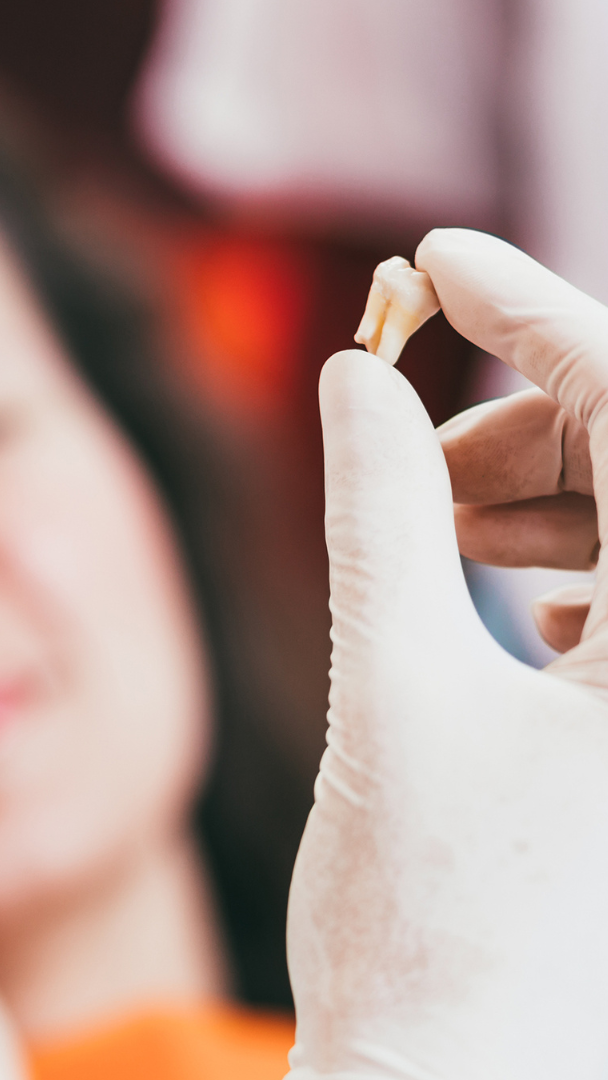

A woman is smiling while sitting in a dental chair.

Eating Soft Foods During the First 24 Hours

After a tooth extraction, you should stick to soft, gentle foods on your mouth. These options are easy to chew and less likely to disrupt the healing process:


  • Applesauce
  • Yogurt
  • Mashed potatoes
  • Smoothies (without seeds)
  • Broth-based soups


Avoid crunchy, hard, or spicy foods and anything that requires a lot of chewing. Also, avoid drinking through straws, as the suction could disturb the blood clot and delay healing.


Transitioning to Semi-Solid Foods

After about 24-48 hours, you might feel ready to eat semi-solid foods. Listen to your body and take it slow. Good choices include:


  • Scrambled eggs
  • Mashed potatoes
  • Soft pasta
  • Cottage cheese


If you notice discomfort, return to softer foods and give yourself more time to heal.


When Can You Eat Solid Foods?

Typically, you can start introducing solid foods around a week after the extraction, but this timeline can vary. Always follow your dentist’s advice. Begin with foods that are easy to chew and swallow, such as:


  • Soft-cooked vegetables
  • Pasta
  • Bananas or avocados
  • Tender meats like chicken or fish


Avoid hard, crunchy, or sticky foods until your dentist gives you the go-ahead. Chewing on the opposite side of the extraction site can help minimize discomfort as you reintroduce solid foods.


Maintaining Oral Hygiene During Recovery

Keeping your mouth clean after a tooth extraction is essential for preventing infection. Here's how to maintain oral hygiene without disturbing the healing process:


  • Gentle Cleaning: After 24 hours, start rinsing your mouth with a warm saltwater solution. Avoid vigorous swishing. Use a soft-bristled toothbrush, but be cautious around the extraction site.
  • Mouth Rinses: Use alcohol-free mouthwashes or saltwater rinses. This helps reduce bacteria and keeps the area clean.


Recognizing Complications

While most extractions heal without issues, watch for signs of complications like:

  • Severe pain that doesn’t go away
  • Excessive bleeding
  • Swelling that worsens after a few days
  • Pus or a bad taste in your mouth

If you notice these symptoms, contact your dentist at Danforth Neighbourhood Dental Centre immediately.


Conclusion

Recovering from a tooth extraction may feel daunting, but by following your dentist’s advice and listening to your body, you’ll be back to your regular diet in no time. Start with soft foods, gradually introduce semi-solids, and finally ease back into solid foods. Healing takes time, so be patient with yourself. Don’t hesitate to contact your local Danforth dentist for any concerns during your recovery.

Stay safe, take care, and enjoy a healthy recovery!

Book Now

Frequently Asked Questions

  • How long does it take to fully recover from a tooth extraction?

    Most people recover from a simple tooth extraction within 7 to 10 days. For more complex extractions, like wisdom teeth, recovery might take up to two weeks. However, the exact time varies depending on the individual and how well you follow your dentist’s post-extraction care instructions.


  • When can I eat solid foods again?

    You can usually start introducing soft foods after 24-48 hours and transition to more solid foods after about a week. Be sure to follow your dentist’s recommendations and listen to your body. If you feel any discomfort, give it more time before moving back to a normal diet

  • What should I avoid after a tooth extraction?

    Avoid using straws, smoking, and eating hard or crunchy foods for at least a week. You should also refrain from vigorous rinsing or spitting to prevent dislodging the blood clot, which is essential for healing.


  • Is pain normal after a tooth extraction?

    Mild discomfort and swelling are normal after a tooth extraction. Over-the-counter pain medications, like ibuprofen or acetaminophen, can help manage the discomfort. If the pain worsens or doesn’t subside after a few days, contact your dentist for further advice.


  • How should I clean my mouth after the procedure?

    For the first 24 hours, avoid brushing the extraction site. After that, gently rinse your mouth with warm salt water to keep the area clean. Continue brushing your other teeth, but be careful around the extraction site to avoid irritation.


  • What are signs of complications?

    If you experience severe pain, excessive bleeding, swelling that worsens, or notice pus, contact your dentist immediately. These could be signs of an infection or other complications requiring professional attention.


  • When should I go back to the dentist?

    Your dentist may schedule a follow-up appointment a week or two after the extraction to check your healing progress. If you have stitches, they may also need to be removed. If any issues arise before your scheduled follow-up, don’t hesitate to contact your dentist.


    Button

Recommended For You

August 27, 2026
If you’ve knocked out a tooth, pick it up by the crown, place it back in the socket or store it in milk, and see an emergency dentist within 30 to 60 minutes. For a severe toothache, call an emergency dentist the same day, but go to a Toronto ER if you have facial swelling, fever, or trouble breathing. Quick answer: A knocked-out tooth is a race against the clock: keep it moist and get to an emergency dentist fast. A toothache with swelling, fever, or breathing trouble isn’t a dental problem anymore; that’s an ER visit. Key Takeaways A knocked-out permanent tooth has the best odds of being saved if it’s back in the socket within 30 minutes , and the tooth must never dry out. Store a tooth you can’t reinsert in cold milk or saliva , never tap water. Never put a knocked-out baby tooth back in: call your dentist instead. Most toothaches need an emergency dentist , not the ER. But facial swelling, fever, or trouble breathing or swallowing means go to the hospital now . An ER can manage pain and dangerous infection, but it can’t fix the tooth: you’ll still need a dentist. When your day turns into a dental emergency It usually happens at the worst possible moment. A puck to the mouth at a rec-league game in Scarborough. A faceplant off a bike on the Don Valley trail. A molar that's been grumbling for a week suddenly screaming at 2 a.m. on a Saturday. One second you're fine; the next you're bleeding, panicking, and wondering whether this is a "call the dentist Monday" problem or a "get in the car now" problem. Take a breath. Most dental emergencies are manageable if you act quickly and know the right moves. This guide walks you through the two most common ones (a knocked-out tooth and a severe toothache) plus the warning signs that mean skip the dentist and go straight to a hospital. If you’re in pain right now and need to be seen today, our emergency dental services page explains how to reach us fast. A quick note: the steps below are general first-aid guidance, not a substitute for hands-on care. When in doubt, call an emergency dentist or 911. Knocked-out tooth: what to do in the first 30 minutes A fully knocked-out permanent tooth (dentists call it an avulsed tooth ) is one of the few dental problems where the clock genuinely decides the outcome. The living cells on the root start to die within about 15 to 60 minutes out of the socket. Move fast and follow these steps in order: Find the tooth and pick it up by the crown , the white chewing part. Never touch the root. Those root-surface cells are what let the tooth reattach, and handling them damages your chances. Rinse it gently, for no more than 10 seconds , only if it's dirty. Use milk or saline if you have it, cold water if you don't. Don't scrub it, don't use soap or mouthwash, and don't dry it off with a cloth or tissue. Put it back in the socket if you can. Line it up the right way, press it in gently with your fingers, and bite down softly on a clean piece of gauze to hold it there. This gives the tooth its best possible chance. If you can’t reinsert it, keep it moist. Drop it in a small container of cold milk , or tuck it inside your cheek (only if you’re sure you won’t swallow it). A tooth-preservation kit with Hanks solution is ideal if one’s on hand. Never store a tooth in tap water : plain water destroys the root cells within about an hour. Get to an emergency dentist within 30 to 60 minutes. Call ahead so they're ready for you. If you can't reach a dentist, go to the nearest hospital emergency room. One important exception: if it's a baby tooth, don't put it back in. Forcing a primary tooth into the socket can damage the permanent tooth developing underneath. Control the bleeding with gauze and call your dentist for guidance. Once you’re in the chair, the dentist will typically clean the socket, reposition the tooth, and splint it to the neighbouring teeth for a week or two. A root canal often follows a week or so later to keep the tooth from becoming infected. That’s a normal part of the protocol, not a sign something went wrong. Severe toothache: how to cope until you're seen Not every toothache is a middle-of-the-night crisis, but a severe one is your body waving a red flag. Pain that throbs, keeps you up, or doesn't ease with over-the-counter medication usually points to decay, a crack, or an infection that won't fix itself. Book a same-day emergency dentist. While you wait, a few things can take the edge off: Rinse with warm salt water (a teaspoon of salt in a cup of warm water) to clean the area and calm irritation. Hold a cold compress against the outside of your cheek for pain and swelling. Don’t apply heat to any facial swelling: warmth can help an infection spread. Take an over-the-counter pain reliever like ibuprofen or acetaminophen, following the label. Never place a painkiller tablet directly against the gum: it can burn the tissue. Floss gently around the sore tooth in case food is trapped, but stop if it hurts. These are stopgaps, not cures. A toothache that's bad enough to search "emergency dentist Toronto" at midnight needs a professional to find and treat the source. The red flags: when to go to a Toronto ER instead Here’s the line that matters most. A toothache is a dental problem until it becomes a medical one. Swelling means an infection has moved beyond the tooth, and a dental infection that spreads can become life-threatening. Go to the nearest emergency room, or call 911, right away if tooth pain comes with any of these: Trouble breathing or swallowing : this can mean the swelling is affecting your airway. Rapidly spreading facial swelling , especially toward your eye or down into your neck. A high fever alongside the swelling or pain. Uncontrolled bleeding that won't slow with 10 to 15 minutes of gentle pressure. Facial trauma or a possible broken jaw. Feeling severely unwell, confused, or drowsy. Toronto’s hospital ERs are open around the clock and can manage dangerous swelling, give IV antibiotics, and control pain. What they generally can’t do is the dental work itself: the root canal, the extraction, the reimplant. So for the tooth, you’ll still need a dentist afterward. That’s exactly why, for problems without those danger signs, calling an emergency dentist directly is faster, cheaper, and more likely to actually solve the problem. Other emergencies worth a same-day call A knocked-out tooth and a raging toothache aren't the only reasons to pick up the phone. A cracked or broken tooth with pain, a loose or pushed-out tooth , a lost filling or crown that leaves a sharp or aching tooth, or a dental abscess (a pimple-like bump on the gum, often with a bad taste) all warrant prompt attention. Rinse with warm water, use a cold compress for swelling, save any pieces you can, and call your dentist the same day. What about cost and coverage? Emergency fees vary by what’s needed, so ask for an estimate when you call: a good office will give you one. If you’re covered by the Canadian Dental Care Plan , which is now open to eligible Canadian residents of all ages without private insurance, confirm the practice participates before your visit, since not every office bills the plan. Don’t let cost worries stop you from being seen: a small problem caught tonight is almost always cheaper than the emergency it becomes next week.
Smiling woman with shoulder-length dark hair in a teal top, standing against a bright blurred background
August 26, 2026
New to the Danforth? Here’s a practical, no-nonsense guide to finding a trustworthy dentist in Toronto’s east end, from checking Ontario licensing to insurance, the CDCP, and what a good first visit feels like.
Dentist in white coat and blue gloves holding a tooth model and dental tool on a blue background
June 25, 2026
Facing a dental crisis? Learn what qualifies as a dental emergency and how to find an emergency dentist in Danforth for fast, trusted relief.
More Posts